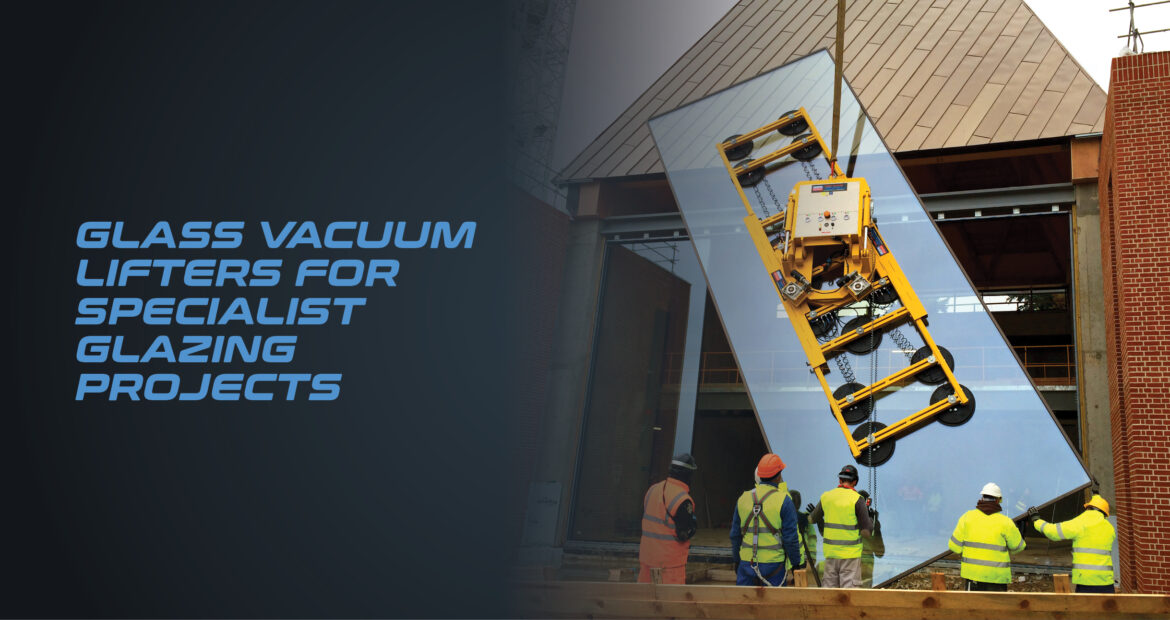

Architectural glazing is becoming increasingly complex, with modern buildings incorporating oversized glass panels, curved façades, textured surfaces, specialist coatings and unconventional shapes. While these designs offer greater architectural flexibility, they also introduce challenges when it comes to safely lifting, handling and installing the glass.
Not every glass vacuum lifter is suitable for every type of glazing. The weight, dimensions, curvature, surface finish and installation requirements of a glass panel can all influence the lifting equipment needed.
A standard vacuum lifter may be suitable for conventional flat glazing, but curved glass, textured surfaces and irregularly shaped units can require specialist suction pads, adjustable lifting frames or alternative vacuum systems.
GGR Group supplies an extensive range of glass vacuum lifting equipment, including specialist solutions for curved, textured, coated, oversized and heavy glazing. Understanding how different glass types affect equipment selection is essential for achieving controlled, efficient and safe installation.
How Do Glass Vacuum Lifters Work?
Glass vacuum lifters use suction pads connected to a vacuum system to securely grip and lift glass panels.
When the suction pads are positioned against a suitable glass surface, the vacuum system removes air from beneath the pads, creating a pressure difference that allows the lifting equipment to hold the load.
Glass vacuum lifters are attached to suitable lifting equipment, such as a crane, before being positioned against the glass. Once a secure vacuum seal has been established, the glass can be lifted, manoeuvred and accurately positioned for installation.
Many glass vacuum lifters also incorporate rotation and tilting mechanisms, allowing installers to adjust the orientation of glass panels during installation.
This makes vacuum lifting equipment particularly useful for architectural glazing, curtain walling, glass replacement and installations where large or heavy units cannot be safely handled manually.
However, selecting the correct lifter involves more than checking its maximum lifting capacity.
The suitability of glass lifting equipment also depends on the available suction area, glass surface condition, centre of gravity, lifting orientation and the configuration of the vacuum pads.
Vacuum Lifters for Different Types of Glass
Different glazing sizes, shapes and surface textures can create different lifting requirements. From oversized and heavy glass panels to curved, textured and unusually shaped glazing, specialist vacuum lifters and suction pad configurations allow contractors to handle a wide variety of glass, provided the equipment is suitable for the specific application.
Curved Glass Lifting
Curved glass is increasingly used in contemporary architecture, from curved curtain walling and feature façades to glazed entrances and bespoke building designs.
Unlike flat glazing, curved panels do not provide a consistent flat surface for conventional suction pads.
The curvature can prevent standard vacuum pads from making sufficient contact with the glass, potentially affecting the vacuum seal and the stability of the load.
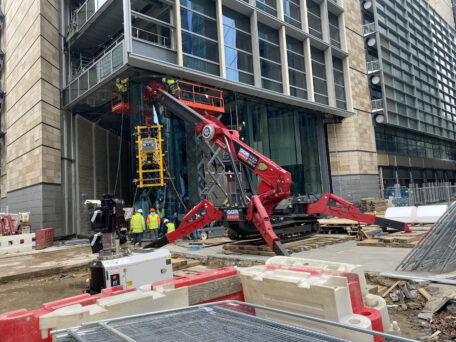
Specialist curved glass vacuum lifters use adaptable frames, adjustable pad arms or suction pads designed for curved surfaces.
For example, GGR Group’s DSL2 Curved Glass Lifter features rotating pad arms designed to accommodate concave and convex materials, with a maximum safe working load of 400kg.
For larger curved glazing installations, the Quad-Curve 2000 offers a maximum capacity of 2,000kg when fitted with its extension arms and all 32 pads, subject to the specified glass curvature and configuration.
When selecting equipment for curved glass lifting, the radius of the glazing, whether the surface is concave or convex, and the available suction pad positions must all be considered.
Textured and Patterned Glass Lifting
Textured, patterned and decorative glass can be particularly challenging to handle using vacuum lifting equipment.
Unlike smooth glass, textured glazing features an uneven surface that may prevent conventional rubber suction pads from creating a reliable, airtight seal.
Specialist textured glass lifters are designed to address these challenges.
GGR Group’s TS1000 Textured Glass Lifter incorporates a constant-running vacuum pump and a closed-cell foam seal designed to conform to irregular surfaces.
It offers a maximum lifting capacity of 1,000kg horizontally or 600kg vertically with the appropriate pad arrangement.
Other options include the Multi-Glaze and Ultra-Glaze 1000, which are designed for applications involving textured glazing.
Importantly, not every textured surface can be lifted using vacuum equipment. GGR Group requires testing of textured materials for these specialist lifters to establish whether a suitable vacuum seal can be achieved.
Coated and Specialist Glass
Architectural glazing frequently incorporates specialist coatings to improve thermal performance, solar control, privacy or appearance.
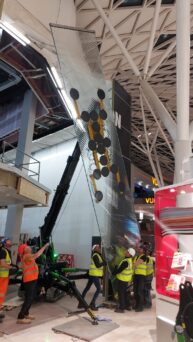
These may include Low-E coatings, decorative finishes, painted glass and other treated surfaces.
While conventional suction pads can be suitable for many types of smooth glass, certain coatings may be sensitive to pad contact, pressure, residue or marking.
Selecting the correct glass suction pads is therefore particularly important when working with high-value coated glazing.
GGR Group supplies Woods Vacuum Pads for Coated Glass, manufactured using a specialist rubber compound for handling Low-E glass and other coated materials.
These pads are designed for use with Woods Powr-Grip vacuum lifters and can also support applications involving painted or silk-screen-printed glass.
Before lifting coated glass, contractors should confirm that the proposed suction pads are compatible with the surface and follow the glass manufacturer’s handling recommendations.
Oversized and Heavy Glass Lifting
Large-format glazing has become a prominent feature of modern commercial and residential construction.
Oversized panels can create uninterrupted glazed façades and extensive glass elevations, but their dimensions and weight make handling and installation more demanding.
Heavy glass lifting requires equipment with sufficient lifting capacity and an appropriate vacuum pad configuration to distribute loads across the glazing surface.
The glass must also remain stable during lifting, rotation, tilting and final positioning.
GGR Group’s Hydraulica range provides specialist lifting solutions for large and heavy glazing units.
The Hydraulica 4000 offers a maximum lifting capacity of 4,000kg, with 360° electrically powered rotation and 90° hydraulic tilt.
Depending on the depth and pattern of the texture, air may enter beneath the pads, compromising the vacuum.
For particularly demanding lifting applications, the Hydraulica 6000 provides a maximum lifting capacity of 6,000kg. It incorporates four independent vacuum circuits, sliding extension
arms, 360° electric rotation and 90° hydraulic tilt, allowing large panels to be controlled and reorientated during handling.
For even heavier glazing, the Hydraulica 8500 offers a maximum lifting capacity of 8,500kg, with 360° electrically powered rotation and 90° hydraulic tilt. Featuring four independent vacuum circuits and sliding extension arms, it can accommodate glazing units up to 11m in length, making it particularly suited to demanding oversized and heavy glass installations.
However, lifting capacity alone does not determine suitability. The dimensions, stiffness and weight distribution of oversized glazing must also be assessed to establish the correct pad configuration and lifting arrangement.
Corner Glass and Unusual Glass Shapes
Not every architectural glazing unit is rectangular.
Contemporary façade designs can incorporate triangular panels, angled glass, corner glazing, glass fins and other irregular shapes that require specialist lifting arrangements.
One of the main challenges is identifying suitable suction pad positions.
Unusual shapes may offer limited contact areas, preventing a conventional vacuum frame from attaching evenly across the surface.
Poorly positioned pads may also create an unsuitable load balance, particularly where the centre of gravity differs from that of a standard rectangular panel.
Adjustable vacuum lifting frames can provide greater flexibility by allowing individual pads to be repositioned to suit the glazing.
For corner glazing, GGR Group also supplies a dedicated Corner Lifter, featuring a maximum 600kg lifting capacity, adjustable arms and a dual-circuit vacuum system.
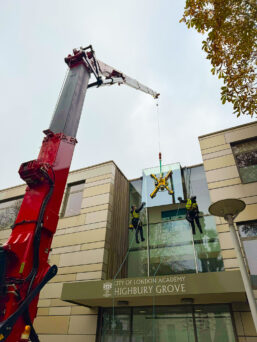
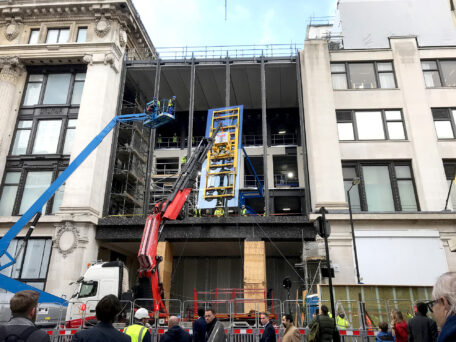
For larger corner glazing installations, GGR Group’s Libro 3000 Overhang Beam can also be fitted with a specialist Corner Lifter attachment. Featuring adjustable wings capable of accommodating angles from 0° to 90°, the attachment enables complex corner and angled glazing units to be lifted beneath architectural overhangs. With a maximum lifting capacity of 2,200kg in its corner lifter configuration, it provides a specialist solution for glazing installations where conventional lifting arrangements may be unsuitable.
For irregular panels, the lifting arrangement must be assessed against the available suction area, load distribution and intended installation orientation. Where a conventional configuration is
unsuitable, a specialist or bespoke glass lifting solution may be required.
Heat-Resistant Suction Pads
Glass handling requirements are not limited to installation on construction sites.
Glass manufacturing and processing environments can also involve handling materials at elevated temperatures.
Standard suction pads have operating temperature limitations, and excessive heat can affect the pad material and its ability to maintain a suitable seal.
Heat-resistant vacuum pads are manufactured using materials designed for these more demanding conditions.
For example, GGR Group’s Woods Heat Resistant Pads are designed for glass manufacturing applications, including handling glass associated with tempering ovens.
The pads are rated for temperatures up to 175°F (approximately 79°C). When fitted to compatible Woods vacuum lifters, they reduce the lifter’s maximum lifting capacity by 50%.
This demonstrates why changing suction pads can affect the overall lifting arrangement.
The glass temperature, pad temperature rating and revised equipment capacity must all be verified before handling heated glass.
Low-Marking Suction Pads
For visually sensitive glazing, protecting the finished surface can be just as important as handling the weight of the panel.
Certain suction pad materials may leave visible marks or residue, particularly on specialist coatings, decorative glazing and other sensitive architectural finishes.
Low-marking vacuum pads are designed to minimise these risks.
GGR Group supplies Low Marking Vacuum Pads compatible with selected Kombi, Hydraulica and DSZ2 vacuum lifters.
These light-coloured rubber pads are designed to reduce dark staining and marking when handling materials including coated or painted glass.
However, low-marking does not necessarily mean completely mark-free.
The glass coating, surface treatment and manufacturer’s recommendations should always be considered before selecting suction pads for sensitive glazing.
Single Circuit vs Dual Circuit vs Quad Circuit Glass Vacuum Lifters
In addition to suction pad compatibility and lifting capacity, the configuration of a vacuum lifter’s vacuum system is an important consideration.
Vacuum circuits are responsible for maintaining the suction needed to secure the glass. Different glass vacuum lifters feature single, dual or quad circuit systems, with each configuration offering different levels of redundancy and vacuum monitoring.
Single Circuit Vacuum Lifters
Single circuit glass vacuum lifters operate using one vacuum circuit to maintain suction across the lifting pads.
These systems can be suitable for a range of glazing applications, provided the equipment is correctly selected and operated within its specified limits.
However, because there is only one vacuum circuit, GGR Group recommends using a suitable secondary safety device to provide additional protection in the unlikely event of vacuum failure.
GGR Group’s Secondary Safety Device for Glass uses specialist straps positioned around the load and attached to the crane hook, providing an additional means of retaining the glass should vacuum be lost. The device must be selected and used in accordance with the lifting plan and manufacturer’s instructions.
Dual Circuit Vacuum Lifters
Dual circuit glass vacuum lifters incorporate two independent vacuum circuits.
Depending on the equipment design, each circuit may have its own vacuum reserve tank, non-return valve and vacuum gauge, allowing vacuum levels to be monitored separately.
GGR Group’s MRT4 Intelli-Grip is an example of a dual circuit lifter.
With a maximum capacity of 320kg, it features adjustable extension arms, 360° rotation, 90° tilt and independent vacuum monitoring through its Intelli-Grip system.
Quad Circuit Vacuum Lifters
Quad circuit vacuum lifters incorporate four independent vacuum circuits, providing additional circuit separation and monitoring within the lifting system.
These arrangements are used on certain specialist high-capacity lifters, including GGR Group’s Hydraulica 4000, Hydraulica 6000 and Hydraulica 8500.
The Hydraulica 6000 features four independent circuits, four vacuum pumps and an audio-visual low-vacuum warning system.
However, the number of vacuum circuits alone does not determine whether a lifter is suitable for a particular application.
The correct configuration depends on the manufacturer’s equipment design, the glazing characteristics, applicable lifting requirements and the planned operation.
Bespoke Glass Vacuum Lifting Solutions
Some architectural glazing projects require more than a standard vacuum lifting arrangement.
Complex building designs can introduce glass panels with unusual dimensions, restricted suction areas, challenging centres of gravity or installation positions that are difficult to reach with
conventional equipment.
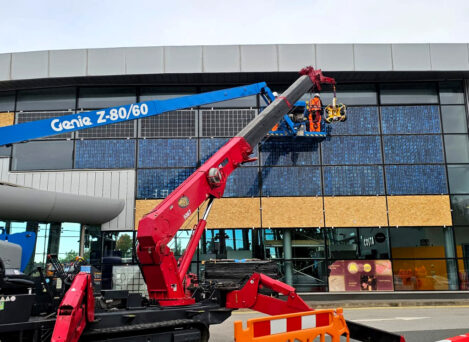
In these situations, bespoke glass lifting solutions or specially configured vacuum lifters can provide greater flexibility.
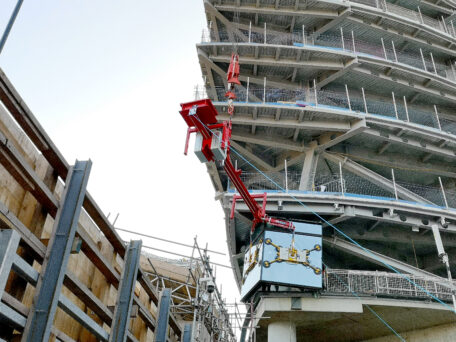
This may involve adjusting suction pad positions, selecting different pad materials, changing the vacuum frame configuration or combining the vacuum lifter with other specialist lifting equipment.
For example, a triangular glazing unit may require an alternative pad arrangement to maintain suitable load distribution, while a curved façade panel may need an adjustable lifting frame that accommodates its radius.
Similarly, installing oversized glass beneath an architectural overhang may require equipment capable of controlling the glass orientation as it approaches the installation point.
GGR Group’s range of specialist glass vacuum lifters, lifting attachments and glazing equipment provides options for projects where conventional arrangements are unsuitable.
Assessing the glazing and installation requirements early allows the lifting solution to be selected or configured around the project, rather than attempting to adapt the installation process to
unsuitable equipment.
How to Choose the Right Glass Vacuum Lifter
Selecting the correct glass vacuum lifting equipment requires a detailed understanding of both the glazing and the installation environment.
Before choosing a vacuum lifter, contractors should consider:
- Glass weight and dimensions: Confirm the total load weight, panel size and how its weight is distributed.
- Glass shape: Establish whether the glazing is flat, curved, angled or irregularly shaped.
- Surface finish: Identify coatings, textures or treatments that could affect suction pad compatibility.
- Suction pad configuration: Ensure the available contact areas allow suitable pad positioning and load support.
- Lifting orientation: Check the equipment’s rated capacity for the intended horizontal, vertical or angled handling operation.
- Installation environment: Consider access restrictions, lifting height, weather conditions, surrounding structures and available working space.
- Lifting plan and equipment limits: Verify the working load limits of the vacuum lifter, its specific configuration and all associated lifting equipment.
The maximum capacity shown on a vacuum lifter’s specification sheet is only one part of the selection process.
Changing suction pads, reducing the number of active pads or lifting in a different orientation can affect the permissible load.
Working with an experienced specialist lifting equipment supplier is essential when selecting the correct vacuum lifter, particularly for complex glazing applications.
GGR Group’s team can provide expert advice on vacuum lifter selection, helping contractors identify the most suitable equipment, suction pads and lifting configurations for their glazing requirements.
Beyond equipment hire and sales, GGR Group can also provide contract lifts, site surveys, lift plans and experienced operators. From initial planning through to the lifting operation itself, these services help contractors approach complex glazing installations with the appropriate equipment, expertise and support.

Specialist Glass Vacuum Lifting Equipment from GGR Group
From conventional façade glazing to oversized architectural panels, curved glass and specialist surface finishes, different glazing applications demand different lifting solutions.
GGR Group supplies an extensive range of glass vacuum lifters, specialist suction pads and associated lifting equipment for hire and purchase.
With options for heavy glass lifting, textured and curved glazing, unusual panel shapes and sensitive surface finishes, GGR Group can help contractors select equipment suited to the demands of their project.
Whether you are planning a complex architectural glazing installation or need advice on selecting the correct suction pads, GGR Group can help identify a suitable lifting solution.
With specialist equipment, experienced operators, site surveys and contract lift services available, GGR Group can support your glazing requirements from initial planning through to installation.
Explore our glass vacuum lifter range or contact GGR Group to discuss your next project.
Frequently Asked Questions About Glass Vacuum Lifters
Can vacuum lifters lift curved glass?
Yes. Specialist curved glass vacuum lifters can handle certain concave and convex glass panels using adjustable frames and suitable suction pad arrangements. The glass radius, weight and available contact area must be compatible with the selected equipment.
Can glass vacuum lifters lift textured glass?
Certain specialist vacuum lifters are designed for textured and patterned glass. Equipment such as GGR Group’s TS1000 uses a conformable foam seal to accommodate irregular surfaces.

However, the glazing must be assessed and tested to establish whether vacuum lifting is suitable.
What is the difference between single, dual and quad circuit vacuum lifters?
Single circuit vacuum lifters use one vacuum circuit, dual circuit lifters have two independent circuits, and quad circuit lifters have four. Multiple independent circuits provide redundancy, while GGR Group recommends an appropriate secondary safety device when using single circuit vacuum lifters.
Can vacuum suction pads damage coated glass?
Unsuitable suction pads may leave marks, residue or potentially damage sensitive coatings. Specialist low-marking pads and pads designed for coated glass can help reduce these risks, but compatibility should be confirmed with the glass manufacturer.
What is the best vacuum lifter for oversized glass?
The best glass vacuum lifter depends on the panel’s weight, dimensions, shape, centre of gravity and installation requirements. High-capacity models such as the Hydraulica 4000, Hydraulica 6000 and Hydraulica 8500 can handle large glazing units, provided the planned lifting arrangement is within the equipment’s specified capabilities.
Trackback URL: https://www.ggrgroup.com/news/glass-vacuum-lifters-specialist-solutions-for-every-type-of-glazing/trackback/