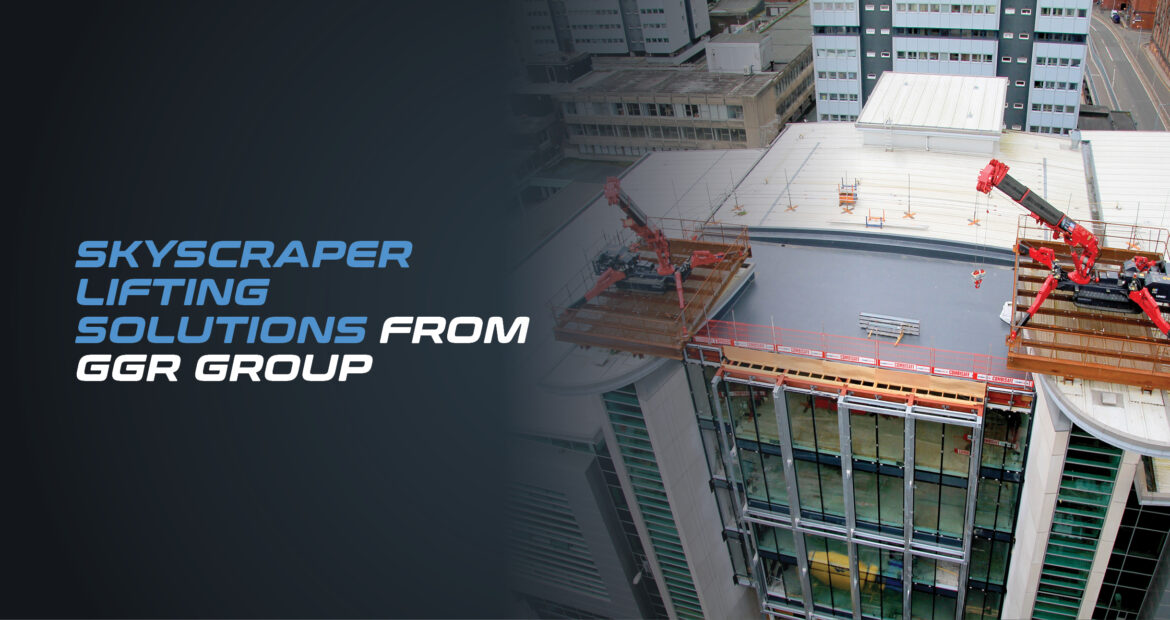
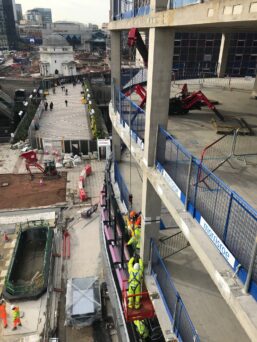
Lifting equipment on a skyscraper or high-rise construction project may need to operate very differently from machinery working at ground level. As a building rises, access becomes more restricted, available working space reduces and glazing or façade units may need to be moved through individual floors before being positioned at the building envelope.
For glazing contractors and façade installers, this can require specialist lifting equipment capable of working within confined floor plates, close to slab edges, between storeys or from upper floors and rooftops.
From compact spider cranes and glazing robots to floor cranes, glass vacuum lifters and overhang lifting systems, different equipment can be combined to support high-rise lifting operations throughout the construction, installation and maintenance of a building.
The Challenges of Lifting on Skyscrapers
High-rise lifting is rarely just a question of reaching the required height. The route that the load and lifting equipment must take through the building can be equally important.
At lower levels, access may already be restricted by surrounding buildings, roads, hoarding or other construction activity. Higher up the building, installers may be working within confined floor plates where traditional mobile lifting equipment cannot operate.
Typical challenges can include:
- Limited external crane access
- Restricted working areas on individual floors
- Limited headroom between floor slabs
- Moving glazing through lifts, corridors and internal openings
- Operating close to slab edges and façade openings
- Transferring glass from stillages to the building envelope
- Installing glazing from inside the structure
- Accessing external façades from upper floors or rooftops
- Coordinating lifts around other trades, access equipment and completed areas
These constraints mean that equipment selection often starts with access and positioning rather than lifting capacity alone.
Working Between Floors
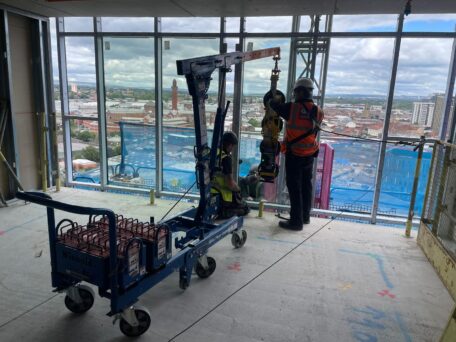
Compact specialist lifting equipment can allow lifting operations to take place directly from individual floors of a high-rise building.
Spider cranes, floor cranes and glazing robots can provide options where larger cranes cannot physically access the working area. Glass vacuum lifters can then be incorporated into the lifting arrangement to grip and control glazing during installation.
Before equipment is selected, the complete route through the building needs to be considered.
Machine dimensions and weight are important, but so are floor loading, door and lift dimensions, turning space, headroom and the available working radius once the machine reaches its operating position.
The position of the load relative to the slab edge is also significant. A compact machine may physically fit into the available area, but the required lifting radius and installation position still need to be assessed as part of the wider lifting operation.
This is why high-rise lifting equipment should be selected around the specific building layout rather than simply choosing a machine based on maximum capacity.
Inside-Out Glazing with Spider Cranes
Inside-out glazing involves handling glazing from within the building and presenting it outwards towards the façade opening for installation.
For certain high-rise projects, this can provide an alternative to lifting every glazing unit externally from ground level.
A compact spider crane can be positioned on the relevant floor plate, with glazing moved into the lifting area before being picked up and transferred towards the building envelope. When paired with an appropriate glass vacuum lifter, the crane can provide the lifting movement while the vacuum attachment controls the glazing unit.
The compact footprint of spider cranes can make them particularly useful where working space is restricted. Depending on the crane and lifting requirements, variable outrigger positions can also provide greater flexibility when setting up within confined areas.
Precise control is especially important when presenting large glazing units towards a façade opening. The crane must be capable of providing the required capacity at the actual working radius, while the complete lifting arrangement needs to account for headroom, surrounding structures and the position of the slab edge.
For projects being glazed progressively as the building rises, inside-out glazing can allow lifting operations to be planned around individual floors rather than relying entirely on external access from below.
Glazing Robots and Floor Cranes for Inside-Out Installation
Not every inside-out glazing operation requires a spider crane.
Glazing robots can provide an alternative where glass needs to be transported through the building and positioned directly at the façade.
Machines such as the Oscar 600, Oscar 1000 and Oscar 1000+ are designed for different glazing requirements, allowing equipment selection to take account of glass weight, access restrictions and the movements required during installation.
A glazing robot can be used to collect a glazing unit from an internal handling or storage position, travel through the building and present the glass towards its installation point.
This can be particularly useful within completed or partially completed floors where the glazing needs to pass through restricted access routes before reaching the façade.
Once in position, the robot can support controlled manipulation of the glass, helping installers adjust its orientation and position during installation.
Compact floor cranes can also have a role in internal high-rise lifting. Where the load needs to be lifted from a floor rather than transported and manipulated by a glazing robot, a floor crane may provide a practical option within the available working area.
The correct choice depends on how the glazing arrives on the floor, how far it needs to travel and how it must be presented at the final installation position.
Lifting Glazing to the Building Envelope
Getting a glazing unit onto the correct floor is only one part of the operation.
Glass may arrive on stillages or be stored away from the façade while other construction activities continue. It then needs to be moved from its storage location to the installation area without unnecessary manual handling.
Different combinations of lifting equipment can be used depending on the site, including:
- Spider crane with a glass vacuum lifter
- Glazing robot with an integrated or suitable vacuum lifting arrangement
- Floor crane with a vacuum lifter
The aim is to maintain controlled handling throughout the transfer.
Large façade units can be difficult to manoeuvre manually because their dimensions often create as much of a challenge as their weight. Restricted headroom, narrow access routes and limited space near the façade can make accurate positioning essential.
Using equipment capable of controlled lifting, rotation or tilt where required can help move the unit from transport orientation into the position needed for installation.
Rooftop Lifting and Façade Installation
Some high-rise lifting operations are better approached from above.
Where the building structure, access arrangements and engineering assessment allow, lifting equipment may be positioned on a rooftop or upper level and used to lift or lower loads along the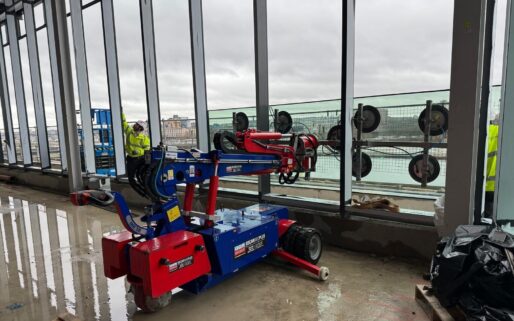 external façade.
This type of arrangement can be considered for applications including:
- Replacement glazing
- Façade panel installation
- Curtain wall installation
- Refurbishment and maintenance
- Replacement of damaged glass at height
Compact spider cranes may be suitable for certain rooftop lifting operations where the machine can be safely transported to and positioned within the available space.
Overhang lifting equipment can also be considered where a load needs to be suspended beyond a parapet, slab edge, soffit or other building feature.
The lifting arrangement will depend heavily on the building itself. Roof loading, machine position, working radius, structural capacity and load path all need to be assessed before equipment is installed or operated at roof level.
For this reason, rooftop lifting requires suitable engineering assessment and detailed lift planning rather than assuming that a compact machine can operate simply because it physically fits within the available area.
Glass Vacuum Lifters for High-Rise Glazing
Glass vacuum lifters form an important part of many skyscraper glazing operations because they provide a controlled connection between the lifting equipment and the glass.
Different glazing units can require different pad arrangements, capacities and manipulation functions.
Depending on the installation, a vacuum lifter may provide rotation or tilt to help change the orientation of the glass during lifting. This can be particularly important where glazing is transported vertically but needs to be rotated, tilted or aligned before entering the façade opening.
Vacuum lifters can be paired with spider cranes, floor cranes and other suitable lifting equipment, while glazing robots may incorporate their own vacuum lifting systems.
The correct lifter should be selected around the specific glass being handled, including its weight, dimensions, surface characteristics and required orientation.
Large or unusually shaped façade units may also require a different pad configuration or lifting arrangement from conventional rectangular glazing.
Selecting Equipment for High-Rise Lifting
There is no single piece of specialist lifting equipment that will suit every skyscraper project.
The most appropriate solution depends on how the load arrives at the building, how it moves vertically through the structure and what needs to happen once it reaches the installation floor.
Key considerations include:
- Weight of the glazing or façade unit
- Unit dimensions and shape
- Required lifting height
- Working radius
- Internal access routes
- Machine dimensions and weight
- Floor loading
- Available headroom
- Position of the slab edge
- Rooftop or upper-floor access
- Required load orientation
- Installation sequence
- Space available for equipment set-up
- Other trades and access equipment working nearby
In some cases, several different pieces of equipment may be used during the same operation. A glazing unit could be transported through the building using one machine before being transferred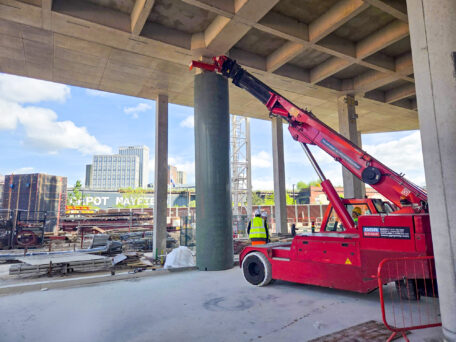 to another lifting system for final installation.
A site survey and detailed lift planning process can help identify these interfaces before work begins.
A Complete High-Rise Lifting Solution
Skyscraper glazing and façade installation can involve lifting operations at almost every stage of the building.
Glazing may need to be transported through restricted internal areas, lifted between floor levels, presented through façade openings or lowered from rooftop positions.
GGR Group provides specialist lifting equipment for these different stages, including spider cranes, glazing robots, floor cranes, glass vacuum lifters and overhang lifting equipment.
Selecting the right combination of equipment can help contractors plan how glazing and façade materials will move from their delivery or storage position through to their final installation point.
For upcoming skyscraper lifting, high-rise glazing or façade installation requirements, contact GGR Group for help assessing the access, lifting and positioning requirements and identifying suitable equipment for the project.
Trackback URL: https://www.ggrgroup.com/news/skyscraper-lifting-solutions-from-ggr-group/trackback/