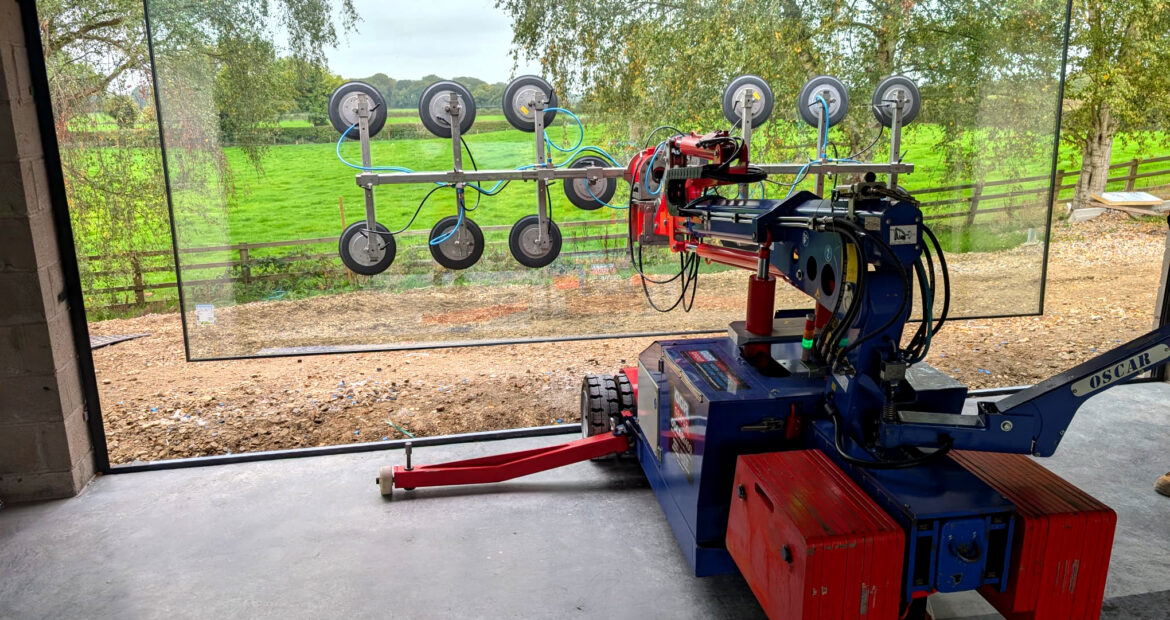
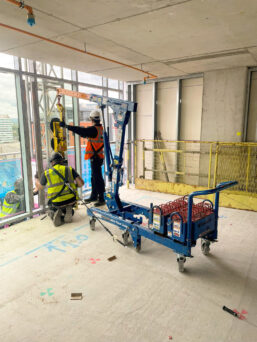
Installing or replacing externally fixed glazing several storeys above ground can present a very different lifting challenge to a conventional façade installation.
External crane access may be restricted, the building could already be substantially complete, or only a small number of glazing units may need replacing. In other situations, the building layout or surrounding site may simply make a different lifting approach more practical.
This is where inside out glazing can provide another way to approach the installation.
Rather than lifting the glass entirely from outside the building, specialist lifting equipment can be positioned internally. The glazing is then lifted from within the building, carefully transferred through the façade opening and controlled outside the building envelope before being positioned back towards the opening for installation.
At height, however, this process requires considerably more than the right machine. Equipment selection, glass handling, access, weather conditions, communication and the sequence of the lift all need to be carefully considered.
GGR Group can support these projects with specialist glass lifting equipment, experienced operators, lift planning and fully managed contract lifting services.
What Is Inside-Out Glazing?
Inside-out glazing is a lifting method that allows externally fixed glazing to be handled using equipment positioned inside a building.
The precise process varies according to the project, but typically the glazing unit is picked up internally before being manoeuvred towards the façade opening. The glass can then be transferred through the opening and moved outside the building envelope, allowing it to be reorientated and positioned against the external face of the façade.
This enables externally fixed glazing to be installed without necessarily relying on lifting equipment positioned at ground level outside the building.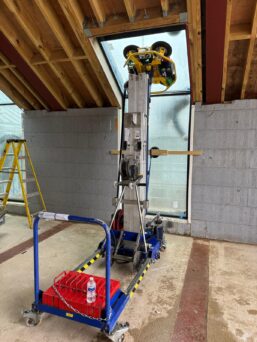
The method selected depends on factors including the glass dimensions and weight, the size of the opening, available internal working space and the equipment that can safely access and operate on the relevant floor.
Inside-out glazing therefore isn’t one fixed lifting procedure. Each installation has to be considered individually.
Why Use Inside-Out Glazing at Height?
Inside-out glazing can be particularly useful on high-rise buildings and upper-storey façade projects where external access presents challenges.
On a congested city-centre development, for example, positioning a conventional crane outside the building may be difficult because of surrounding structures, roads, pedestrian routes or limited available space. Depending on the proposed lifting operation, external craneage may also require additional permissions, permits, traffic management measures or road closures.
These requirements can affect how quickly a lift can be arranged and may restrict the dates or times when work can take place. Where glazing needs to be installed or replaced within a particular programme window, bringing suitable lifting equipment to the working floor and approaching the installation from inside the building may therefore provide a more practical option, subject to the requirements of the individual project.
The method can also be considered on completed or partially completed buildings where individual glazing units need to be replaced. For a relatively localised glass replacement programme, getting suitable lifting equipment to the required floor may be more proportionate than establishing a larger external lifting operation at ground level.
There are numerous other project-specific reasons why inside-out glazing may be considered. The important point is that it should form part of the wider lift planning process rather than being treated as the default method for high rise glazing installation.
Controlling Glass Outside the Building Envelope
Moving a large glazing unit through an opening is already a demanding handling operation. Doing so several storeys above ground introduces additional factors that need to be addressed during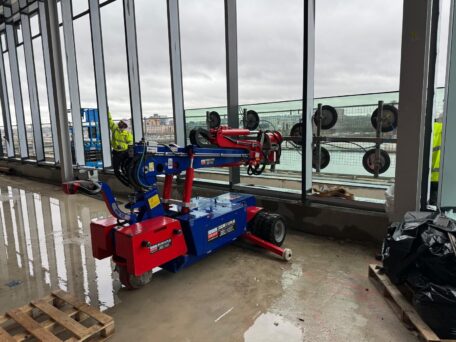 planning.
Space around the façade opening can be limited, leaving little room for the machine, glass and installation team to operate. The glazing may also need to rotate, tilt or change orientation as it moves through the opening.
Once the glass passes beyond the façade, maintaining controlled movement becomes particularly important. The lifting arrangement needs to allow the glazing to be positioned without unwanted contact with the surrounding façade while providing the installation team with the control required for final alignment.
Wind and weather conditions also become increasingly relevant when a glazing unit is moved outside the building envelope at height.
Communication between the equipment operator, glazing installers and other members of the lifting team must therefore form part of the planned operation, alongside appropriate exclusion zones and measures to protect people working or passing below.
Safety does not come simply from carrying out the lift from inside the building. It comes from selecting an appropriate lifting method and combining suitable equipment with competent personnel and detailed planning.
Choosing the Right Equipment for the Installation
The right specialist glazing equipment depends entirely on the requirements of the individual project.
Glazing Robots
A glazing robot can provide a highly controlled way of handling glass within restricted internal areas.
Using vacuum lifting technology alongside powered manipulation, glazing robots can allow operators to lift, move and accurately position glazing while maintaining control throughout different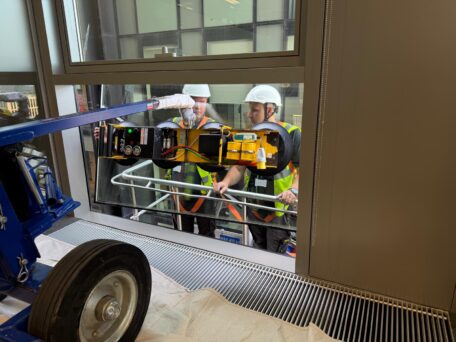 stages of the installation.
Depending on the machine selected, functions such as rotation, tilting, side shift and other powered adjustments can help when manoeuvring glass towards and through a façade opening.
GGR Group’s glazing robot fleet includes equipment such as the Oscar 600, Oscar 800 3D, Oscar 1000 and Oscar 1400, allowing the lifting solution to be matched to the particular access and positioning requirements of the project.
Mini Spider Cranes
Where greater lifting height, reach or flexibility is required, a mini spider crane may also form part of an inside-out glazing solution.
The compact dimensions of the UNIC mini spider crane range allow suitable machines to access areas where conventional cranes may not be practical. Once positioned, their combination of compact size and lifting performance can support controlled lifting within restricted working environments.
Depending on the building and lift plan, a mini crane can be paired with appropriate below-the-hook equipment to handle glazing from within the structure.
A mini crane is not necessary for every inside-out glazing project, but it provides another option when developing a lifting method around the available access, working radius and required outreach.
Glass Vacuum Lifters
The connection between the lifting machine and the glass is equally important.
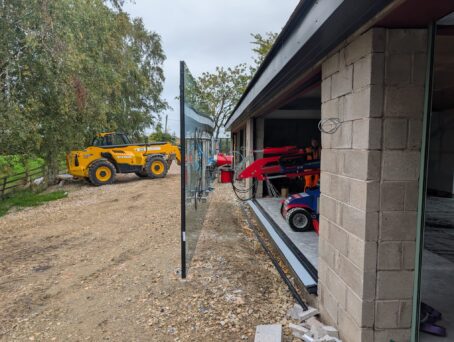
A suitable glass vacuum lifter allows the glazing unit to be securely handled and, depending on the lifter selected, can support the rotation or tilting required to achieve the installation orientation.
GGR Group provides a wide range of vacuum lifting equipment that can be incorporated into glazing robot, mini crane and other specialist lifting arrangements.
Why Experienced Operators Matter
Supplying the lifting machine is only one part of a complex glazing operation.
An experienced operator understands how the equipment responds when lifting and positioning glazing within restricted spaces. Small, controlled movements can make a significant difference when the glass is passing through a façade opening or being brought towards its final position.
GGR operators can work alongside glazing specialists to set up and operate the equipment, coordinate lifting movements and respond to the conditions encountered during the operation.
This combination of equipment and specialist lifting expertise can be particularly valuable where access is limited and several stages of movement must be coordinated accurately.
Planning an Inside-Out Glazing Lift
Successful inside out glazing at height starts before the equipment reaches site.
The planning process needs to establish exactly how the glazing will travel from its starting position to the façade opening and ultimately into its installed position.
Glass dimensions and weight are fundamental, but they are only part of the picture. The centre of gravity, opening dimensions, internal access route, floor loading, available headroom and equipment positioning can all influence the lifting method.
The required working radius and outreach also need to be considered alongside the proposed rigging arrangement and vacuum lifting equipment.
At the façade itself, edge protection, weather conditions, exclusion zones and communication procedures may need to be incorporated into the method. The installation sequence should also be considered so that each stage of the lift can be carried out in a controlled manner.
Early involvement can be particularly valuable because it allows the lifting solution to be developed around the building and glazing requirements rather than trying to fit equipment around an already established installation method.
Fully Planned Contract Lifts from GGR Group
For technically demanding glazing installations, GGR Group can provide more than equipment hire.
Where appropriate, our contract lift service allows us to plan and manage the lifting operation, bringing together the equipment, personnel and lifting expertise required for the project.
A fully planned lifting solution can include site surveys, equipment selection, lift planning, risk assessments and method statements, qualified lifting personnel, equipment operators, supervision and coordination of the lifting operation.
This can be particularly valuable where glazing robots, cranes, vacuum lifters and multiple site teams need to work together as part of one coordinated installation.
GGR Group works alongside glazing contractors, façade specialists and site management teams, providing the specialist lifting solution while the glazing contractor remains focused on the installation itself.
Planning a High-Level Glazing Project?
Inside-out glazing can provide another option when externally fixed glass needs to be installed or replaced at height, but the correct solution will always depend on the building, access, glazing unit and wider project requirements.
From glazing robots and glass vacuum lifters to UNIC mini spider cranes, experienced operators and fully planned contract lifting services, GGR Group can develop a lifting solution around the demands of the installation.
If you’re planning a challenging glazing installation at height, involve our team early to discuss equipment hire, operated hire or a fully planned contract lift.