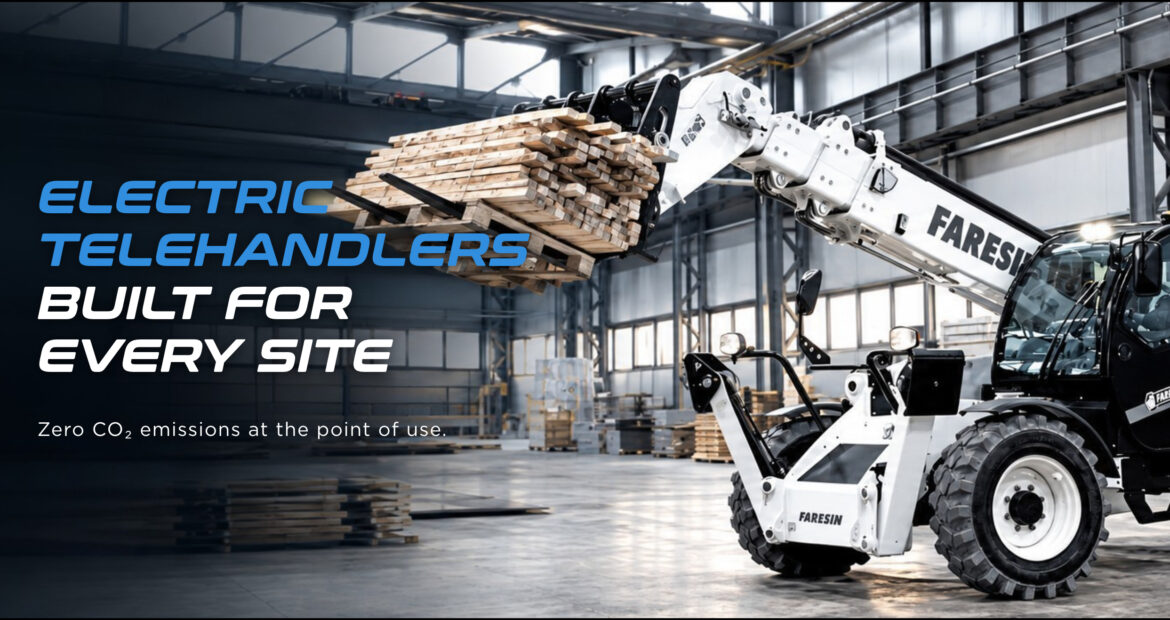
As construction and industrial sites place greater emphasis on reducing exhaust emissions, managing noise and improving operational efficiency, electric-powered equipment is becoming an increasingly practical choice for everyday materials handling.
Telehandlers are essential machines across construction, infrastructure and industrial projects, providing the lifting capacity, reach and manoeuvrability needed to move materials efficiently around site. Traditionally powered by diesel engines, these versatile machines are also available with battery-electric drivetrains, allowing contractors to complete familiar lifting tasks without producing exhaust emissions at the point of use.
Electric telehandlers combine the capabilities of conventional telescopic handlers with the advantages of electric power, making them particularly useful for indoor operations, urban construction projects and environments where noise and emissions need to be carefully managed.
With models including the compact 6.26 Electric Telehandler and the larger 17.45 Electric Telehandler, GGR Group offers battery-powered materials handling solutions for a wide range of lifting requirements.
What Is a Telehandler and What Is It Used For?
A telehandler, also known as a telescopic handler, is a versatile lifting machine designed to move, raise and position materials at different heights and distances.
Unlike a conventional forklift, which primarily raises loads vertically, a telehandler features an extendable telescopic boom. This allows materials to be lifted above obstacles, positioned at elevated working areas or moved forwards beyond the machine’s immediate footprint.
Telehandlers are widely used across construction and industrial environments for transporting pallets, unloading deliveries, moving building materials and supplying equipment to elevated working areas.
Their versatility also comes from the attachments available. Depending on the machine and application, telehandlers can be fitted with forks, buckets and other compatible lifting attachments, allowing a single machine to support different materials handling tasks.
On construction sites, this can mean unloading a delivery before transporting materials to where they are needed. In industrial facilities, telehandlers can assist with machinery handling, materials movement and general site logistics.
Electric telehandlers perform these same essential functions, replacing the conventional diesel engine with a battery-powered electric drivetrain.
Why Choose an Electric Telehandler?
The advantages of electric telehandlers extend beyond simply replacing diesel with electricity. For contractors, the choice of power source can influence where equipment operates, how work is planned and the practical impact of machinery on its surroundings.
Zero Exhaust Emissions at the Point of Use
One of the most significant advantages of a battery-powered telehandler is its ability to operate without producing exhaust emissions.
Diesel-powered equipment releases exhaust gases during operation, which can create additional considerations when working inside buildings, enclosed industrial facilities or areas with limited ventilation.
An electric telehandler eliminates exhaust emissions at the point of use, making it particularly useful for indoor materials handling, warehouse operations and refurbishment projects.
This can also benefit construction projects taking place around occupied buildings, where contractors may be required to minimise the impact of their operations on the surrounding environment.
While electric machinery still has an environmental footprint associated with electricity generation, battery production and its wider lifecycle, removing exhaust emissions directly from the working area is a practical advantage.
Reduced Noise During Operation
Construction machinery can generate considerable noise, particularly when diesel engines are running for extended periods.
Electric telehandlers operate without the continuous engine noise associated with diesel-powered alternatives, potentially reducing overall noise levels during materials handling operations.
This is particularly valuable on urban developments, refurbishment projects and construction sites near residential buildings, hospitals, schools and operational offices.
Quieter machinery can also support communication between operators and surrounding site personnel, although normal site noise controls and safe working procedures remain essential.
Reduced Maintenance Requirements
Electric drivetrains generally have fewer engine-related servicing requirements than conventional diesel systems.
Without a diesel engine, there is no need for routine engine oil changes, fuel filter replacements or maintenance of diesel exhaust aftertreatment systems.
Although electric telehandlers still require inspections and maintenance of their hydraulic systems, tyres, brakes, batteries and other components, removing conventional engine servicing can help simplify planned maintenance.
For businesses operating multiple machines, this can be an important consideration when managing equipment availability and servicing schedules.
Operating Efficiency and Running Costs
Electric telehandlers can offer potential running-cost advantages, particularly where electricity costs are favourable compared with diesel and equipment is used regularly.
However, the financial benefits depend on the application, charging arrangements, electricity tariffs and operating patterns.
For contractors, effective charging arrangements are essential. Understanding how frequently a machine will be used, the duration of working shifts and the availability of electrical infrastructure helps determine whether an electric telehandler is suitable.
Selecting the correct battery capacity can also reduce unnecessary interruptions, allowing operators to plan charging around normal working periods.
Introducing the GGR Group 6.26 Electric Telehandler
The 6.26 Electric Telehandler is a compact, battery-powered materials handling machine designed for both indoor and outdoor applications.
With a maximum lifting capacity of 2,600kg and a maximum lifting height of 5.9 metres, it provides the performance required for a wide range of everyday construction and industrial lifting tasks.
Its compact design makes it particularly useful for projects where equipment must operate around existing structures, between buildings or within confined working areas.
6.26 Electric Telehandler: Key specifications
2,600kg
Max. lifting capacity
5.9m
Max. lifting height
3.1m
Max. working radius
The machine’s 3.1-metre maximum working radius allows materials to be positioned beyond its immediate footprint, offering additional flexibility when delivering loads to elevated or difficult-to-access areas.
All-wheel drive and multiple steering modes help operators manoeuvre the telehandler across different working environments. This is particularly useful on busy construction sites where equipment must move between materials storage areas, delivery points and active working zones.
The 6.26 also features a fully enclosed, heated operator cab, providing a comfortable working environment during outdoor operations and colder conditions.
Additional features include a reversing camera and safe load indicator, supporting operator awareness and controlled lifting operations.
Compatible fork and bucket attachments further increase the machine’s versatility, allowing it to carry out different materials handling activities without requiring separate specialist machines for every task.
Powered by lithium battery technology, the 6.26 provides these familiar telehandler capabilities without diesel exhaust emissions at the point of use.
Battery Options to Suit Different Working Requirements
Not every project places the same demands on its lifting equipment. Some telehandlers are used intermittently throughout the day, while others are required for frequent materials handling across longer working shifts.
To accommodate these different requirements, the GGR Group 6.26 Electric Telehandler is available with three lithium battery configurations.
| Battery Configuration | Battery Capacity | Operating Duration |
|---|---|---|
| Standard Battery Capacity | 315Ah | Up to 6 hours |
| Extended Battery Capacity | 420Ah | Up to 8 hours |
| High Battery Capacity | 560Ah | Up to 11 hours |
Operating durations are approximate and depend on usage, lifting loads and site conditions.
The Standard Battery Capacity model is particularly suited to everyday materials handling where the machine is used at intervals throughout the working day. With up to six hours of operation, it provides a practical option for general construction and site logistics.
For projects requiring longer operating periods, the Extended Battery Capacity model offers up to eight hours of runtime. This additional capacity can be useful where lifting tasks are frequent or interruptions for charging need to be reduced.
The High Battery Capacity model provides up to eleven hours of operation, making it particularly suitable for intensive applications and longer working shifts where equipment availability is a priority.
Charging arrangements are another important consideration. The standard 315Ah model can be recharged in approximately three hours and 45 minutes using a standard external three-phase charger, or as little as 1.5 hours using an optional fast charger.
Standard and fast charging options are also available across the range, giving contractors greater flexibility when planning equipment use.
By matching the battery configuration to the project’s expected workload, contractors can select equipment that balances operational requirements with charging availability.
Where Can Electric Telehandlers Make the Biggest Difference?
Electric telehandlers can be used across many of the same applications as diesel-powered equipment, but their advantages become particularly relevant in certain working environments.
Urban construction sites often operate close to residential properties, offices and public spaces. Reduced machine noise and the absence of exhaust emissions can help contractors manage the impact of materials handling activities on surrounding areas.
Refurbishment and internal construction projects can benefit where materials must be moved within existing buildings. Battery-powered operation removes diesel exhaust emissions from the immediate working environment, although suitable access, ground conditions and ventilation requirements must still be assessed.
Manufacturing and industrial facilities frequently require equipment to operate around established production areas. An electric telehandler can provide lifting and materials handling capabilities while avoiding exhaust emissions that may be undesirable in controlled indoor environments.
Warehousing and logistics operations can also benefit from battery-powered equipment when handling pallets, moving stock and unloading deliveries. Where suitable charging infrastructure is available, electric telehandlers can be incorporated into established daily operating schedules.
Infrastructure projects and noise-sensitive locations may have restrictions relating to working hours, noise and equipment emissions. Electric machinery offers another option for contractors planning operations around these requirements.
In each application, the benefit is not simply that the machine is electric. It is that electric power can make it more practical to complete materials handling tasks within the specific restrictions of the working environment.
What About Projects Requiring Greater Lifting Height?
For projects requiring greater lifting height or capacity, GGR Group also supplies the 17.45 Electric Telehandler.
This larger battery-powered model offers a maximum lifting capacity of 4,500kg, a maximum lifting height of 16.4 metres and a maximum working radius of 12.6 metres.
Its three-section telescopic boom, front stabilisers and transverse levelling system support materials handling at greater heights, making it suitable for larger construction and infrastructure applications.
Like the 6.26, the 17.45 uses lithium battery technology to deliver electric-powered lifting without exhaust emissions at the point of use. It is also compatible with a range of attachments, including forks and buckets.
Together, the two models demonstrate how electric telehandlers can support different project requirements, from compact site materials handling to applications demanding substantially greater lifting reach.
Electric vs Diesel Telehandlers: What Should Contractors Consider?
Choosing between an electric and diesel telehandler should depend on the requirements of the project rather than the power source alone.
Both types of machine have advantages, and understanding the working environment is essential when selecting suitable equipment.
| Consideration | Electric Telehandler | Diesel Telehandler |
|---|---|---|
| Exhaust Emissions | Zero exhaust emissions at point of use | Produces exhaust emissions |
| Noise | Generally quieter operation | Engine noise during operation |
| Maintenance | Fewer engine-related servicing requirements | Requires regular engine servicing |
| Energy Supply | Requires charging infrastructure | Requires diesel refuelling |
| Working Duration | Depends on battery capacity and usage | Depends on fuel capacity and usage |
| Site Suitability | Ideal for indoor and noise-sensitive environments | Suitable for sites with limited charging access |
Electric telehandlers are especially attractive where reducing exhaust emissions and noise is a priority. They can also offer maintenance and running-cost advantages depending on how frequently the machine is used.
However, diesel telehandlers may remain more practical on remote sites where charging infrastructure is unavailable or operating schedules make recharging difficult.
For electric machines, contractors should consider lifting capacity, working radius, battery runtime, charging facilities and the intensity of the intended application.
It is also important to assess the machine’s rated lifting capacity at the required height and outreach, rather than relying solely on its maximum capacity.
Ultimately, selecting the right telehandler means matching the equipment to the work being carried out, the site conditions and the practical requirements of the operator.
Electric Telehandler Hire and Sales from GGR Group
Electric telehandlers provide a practical alternative to conventional diesel-powered materials handling equipment, particularly on projects where exhaust emissions, noise and operational efficiency are important considerations.
GGR Group’s 6.26 Electric Telehandler combines a 2,600kg lifting capacity with compact dimensions, versatile materials handling capabilities and three battery configurations to suit different operating requirements.
For projects requiring greater lifting height and capacity, the 17.45 Electric Telehandler offers additional reach while retaining the benefits of battery-electric operation.
Whether you need a compact 6m electric telehandler for everyday site logistics or a larger machine for more demanding lifting requirements, GGR Group can help identify a suitable solution.
Looking for electric telehandler hire or purchase in the UK? Explore GGR Group’s telehandler range or contact our team to discuss your project requirements and find the right equipment for the job.
Trackback URL: https://www.ggrgroup.com/news/electric-telehandlers-a-cleaner-quieter-approach-to-materials-handling/trackback/